About me
Anurag Rankja
I’m a UX/UI designer focused on turning complexity into clarity through research-driven, user-centered design.
I work across UX design, UI design, UX research, and product thinking to create experiences that are practical, accessible, sustainable, and grounded in evidence.
My work spans healthcare, education, and digital services, where I use usability testing, interaction design, and prototyping to improve trust, efficiency, and overall user experience. I care about designing products that not only look clear, but work clearly, inclusively, and responsibly for the people using them.
WHAT I BRING TO THE TABLE
Designing clearer experiences through research, prototyping, and thoughtful problem-solving.
1. UX Research
Wireframing & prototyping
Eye-tracking & journey mapping
Heuristic evaluations & feedback synthesis
Turning insights into actionable design
2. Interface Design
Figma prototyping & wireframing
Design systems & reusable components
Responsive layouts for web & mobile
Interaction design & micro-interactions
3. Product Thinking
Solution mapping
User flow optimization
A/B testing & iteration
Business impact alignment
4. Team Alignment
Cross-functional collaboration
Stakeholder workshops and presentations
Design handoff and documentation
Iteration based on feedback
1. UX Research
Wireframing & prototyping
Eye-tracking & journey mapping
Heuristic evaluations & feedback synthesis
Turning insights into actionable design
2. Interface Design
Figma prototyping & wireframing
Design systems & reusable components
Responsive layouts for web & mobile
Interaction design & micro-interactions
3. Product Thinking
Solution mapping
User flow optimization
A/B testing & iteration
Business impact alignment
4. Team Alignment
Cross-functional collaboration
Stakeholder workshops and presentations
Design handoff and documentation
Iteration based on feedback
1. UX Research
Wireframing & prototyping
Eye-tracking & journey mapping
Heuristic evaluations & feedback synthesis
Turning insights into actionable design
2. Interface Design
Figma prototyping & wireframing
Design systems & reusable components
Responsive layouts for web & mobile
Interaction design & micro-interactions
3. Product Thinking
Solution mapping
User flow optimization
A/B testing & iteration
Business impact alignment
4. Team Alignment
Cross-functional collaboration
Stakeholder workshops and presentations
Design handoff and documentation
Iteration based on feedback
Discover My Journey in Design
My path into design began with a practical problem, not a screen. While working in mechanical engineering, I contributed to improving a tile product that had become slippery in wet conditions, and that experience showed me how design decisions shape usability, safety, and everyday behavior. That experience inspired me to understand design more deeply, beyond the physical product itself, and eventually led me to explore coding and web design, which became the bridge from physical product thinking into digital interfaces and UX/UI.
Since then, I’ve built my practice around the same principle: design should respond to real human needs with clarity, purpose, and measurable value. My experience in web and UX/UI design has strengthened my collaboration skills, interface thinking, and ability to create experiences that are both intuitive and effective.
TRAINEE UI/UX DESIGNER
Infostring Technolabs Pvt. Ltd.
February 2024 – August 2024
TRAINEE UI/UX DESIGNER
Infostring Technolabs Pvt. Ltd.
February 2024 – August 2024
TRAINEE UI/UX DESIGNER
Infostring Technolabs Pvt. Ltd.
February 2024 – August 2024
JUNIOR WEB DESIGNER
Infostring Technolabs Pvt. Ltd.
April 2021 – June 2023
JUNIOR WEB DESIGNER
Infostring Technolabs Pvt. Ltd.
April 2021 – June 2023
JUNIOR WEB DESIGNER
Infostring Technolabs Pvt. Ltd.
April 2021 – June 2023
THE ACADEMIC FOUNDATION
My formal education shaped how I approach design by providing a broad baseline in understanding human behavior and solving complex problems. It gave me the essential tools to look at design challenges from a well rounded perspective and turn abstract ideas into functional solutions.
MSc. UX Design
PFH University, Germany
October 2024 - May 2026
MSc. UX Design
PFH University, Germany
October 2024 - May 2026
MSc. UX Design
PFH University, Germany
October 2024 - May 2026
LEARNING THAT SHAPED MY PRACTICE
My growth has been shaped by practical work and applied learning. Together, they have influenced how I approach design, technology, and user-centered thinking.
Human Factors in AI
Duke University, via Coursera
March 2026
Human Factors in AI
Duke University, via Coursera
March 2026
Human Factors in AI
Duke University, via Coursera
March 2026
FRONT END WEB DEVELOPMENT
Coding Ninjas
January 2022 – April 2022
FRONT END WEB DEVELOPMENT
Coding Ninjas
January 2022 – April 2022
FRONT END WEB DEVELOPMENT
Coding Ninjas
January 2022 – April 2022
My Tech Stack
I build with intention. Figma and Adobe XD for design. Miro for research synthesis. HTML and CSS for front-end structure. Canva and Adobe Express for visual content.
Vibe Coding
Where I turn creative intuition into functional system logic.

Figma
Where I shape ideas into clean, usable interfaces.

Adobe Xd
Where I prototype screens and test flows fast.

Miro
Where I turn research into clear direction.

HTML
Where I build the structure behind the page.

CSS
Where I add clarity, spacing, and style.

Canva
Where I create quick visuals and portfolio assets.

Adobe Express
Where I make branded content feel polished.



Designing Clear, Intentional Experiences
My process is shaped by context, feedback, and iteration. I start by understanding the people and the problem in depth, then I frame the challenge, explore directions, bring ideas to life, and refine the work through feedback and synthesis until it feels clear and practical.
01.
Start with People
I begin by understanding users, their needs, and the context behind the problem. This helps me see what matters most before I move into solutions.
01.
Start with People
I begin by understanding users, their needs, and the context behind the problem. This helps me see what matters most before I move into solutions.
02.
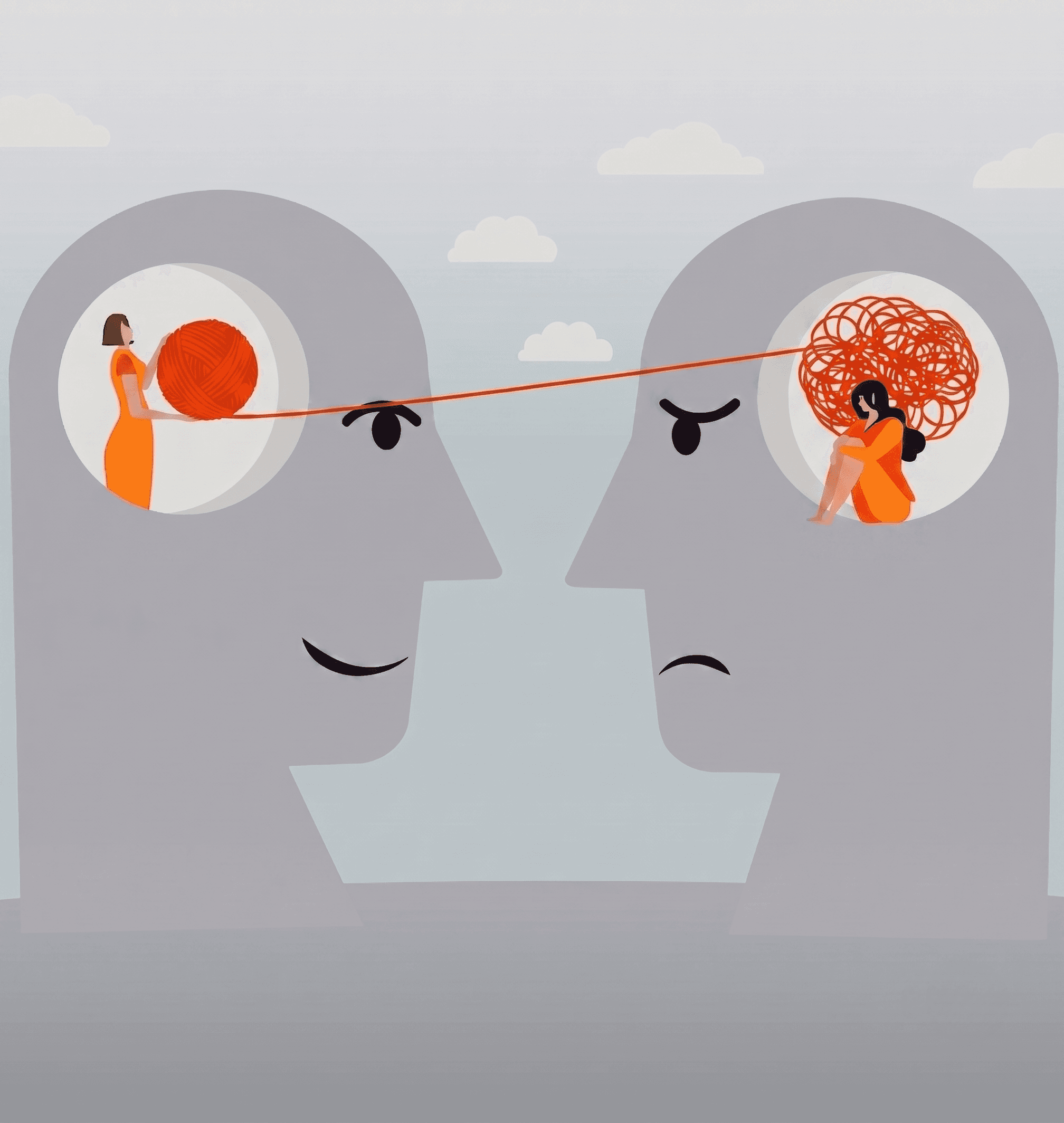
Frame the Challenge
I synthesize the inputs, define the core problem, and focus the work on what matters most. This step helps me narrow complexity into a clear direction.
02.
Frame the Challenge
I synthesize the inputs, define the core problem, and focus the work on what matters most. This step helps me narrow complexity into a clear direction.
03.
Explore Directions
I generate ideas, compare possibilities, and look for the strongest path forward. I use this stage to stay open, challenge assumptions, and surface better options.
03.
Explore Directions
I generate ideas, compare possibilities, and look for the strongest path forward. I use this stage to stay open, challenge assumptions, and surface better options.
03.
Explore Directions
I generate ideas, compare possibilities, and look for the strongest path forward. I use this stage to stay open, challenge assumptions, and surface better options.
04.
Bring It to Life
I shape the direction into flows, wireframes, and prototypes that make the idea tangible. This lets me test the thinking early and turn intent into something real.
04.
Bring It to Life
I shape the direction into flows, wireframes, and prototypes that make the idea tangible. This lets me test the thinking early and turn intent into something real.
04.
Bring It to Life
I shape the direction into flows, wireframes, and prototypes that make the idea tangible. This lets me test the thinking early and turn intent into something real.
05.
Test, Synthesize, Refine
I test the work, look for patterns in feedback, and refine the solution until it feels clear and practical. This is where I connect what users say with what the design should become.
05.
Test, Synthesize, Refine
I test the work, look for patterns in feedback, and refine the solution until it feels clear and practical. This is where I connect what users say with what the design should become.

Hi
Hi
LET’S CONNECT
If my work resonates with you, feel free to reach out about opportunities, collaborations, or a conversation around UX, UI, and Product Design.
About me
Anurag Rankja
I’m a UX/UI designer focused on turning complexity into clarity through research-driven, user-centered design.
I work across UX design, UI design, UX research, and product thinking to create experiences that are practical, accessible, sustainable, and grounded in evidence.
My work spans healthcare, education, and digital services, where I use usability testing, interaction design, and prototyping to improve trust, efficiency, and overall user experience. I care about designing products that not only look clear, but work clearly, inclusively, and responsibly for the people using them.
WHAT I BRING TO THE TABLE
Designing clearer experiences through research, prototyping, and thoughtful problem-solving.
1. UX Research
Wireframing & prototyping
Eye-tracking & journey mapping
Heuristic evaluations & feedback synthesis
Turning insights into actionable design
2. Interface Design
Figma prototyping & wireframing
Design systems & reusable components
Responsive layouts for web & mobile
Interaction design & micro-interactions
3. Product Thinking
Solution mapping
User flow optimization
A/B testing & iteration
Business impact alignment
4. Team Alignment
Cross-functional collaboration
Stakeholder workshops and presentations
Design handoff and documentation
Iteration based on feedback
1. UX Research
Wireframing & prototyping
Eye-tracking & journey mapping
Heuristic evaluations & feedback synthesis
Turning insights into actionable design
2. Interface Design
Figma prototyping & wireframing
Design systems & reusable components
Responsive layouts for web & mobile
Interaction design & micro-interactions
3. Product Thinking
Solution mapping
User flow optimization
A/B testing & iteration
Business impact alignment
4. Team Alignment
Cross-functional collaboration
Stakeholder workshops and presentations
Design handoff and documentation
Iteration based on feedback
1. UX Research
Wireframing & prototyping
Eye-tracking & journey mapping
Heuristic evaluations & feedback synthesis
Turning insights into actionable design
2. Interface Design
Figma prototyping & wireframing
Design systems & reusable components
Responsive layouts for web & mobile
Interaction design & micro-interactions
3. Product Thinking
Solution mapping
User flow optimization
A/B testing & iteration
Business impact alignment
4. Team Alignment
Cross-functional collaboration
Stakeholder workshops and presentations
Design handoff and documentation
Iteration based on feedback
Discover My Journey in Design
My path into design began with a practical problem, not a screen. While working in mechanical engineering, I contributed to improving a tile product that had become slippery in wet conditions, and that experience showed me how design decisions shape usability, safety, and everyday behavior. That experience inspired me to understand design more deeply, beyond the physical product itself, and eventually led me to explore coding and web design, which became the bridge from physical product thinking into digital interfaces and UX/UI.
Since then, I’ve built my practice around the same principle: design should respond to real human needs with clarity, purpose, and measurable value. My experience in web and UX/UI design has strengthened my collaboration skills, interface thinking, and ability to create experiences that are both intuitive and effective.
TRAINEE UI/UX DESIGNER
Infostring Technolabs Pvt. Ltd.
February 2024 – August 2024
TRAINEE UI/UX DESIGNER
Infostring Technolabs Pvt. Ltd.
February 2024 – August 2024
TRAINEE UI/UX DESIGNER
Infostring Technolabs Pvt. Ltd.
February 2024 – August 2024
JUNIOR WEB DESIGNER
Infostring Technolabs Pvt. Ltd.
April 2021 – June 2023
JUNIOR WEB DESIGNER
Infostring Technolabs Pvt. Ltd.
April 2021 – June 2023
JUNIOR WEB DESIGNER
Infostring Technolabs Pvt. Ltd.
April 2021 – June 2023
THE ACADEMIC FOUNDATION
My formal education shaped how I approach design by providing a broad baseline in understanding human behavior and solving complex problems. It gave me the essential tools to look at design challenges from a well rounded perspective and turn abstract ideas into functional solutions.
MSc. UX Design
PFH University, Germany
October 2024 - May 2026
MSc. UX Design
PFH University, Germany
October 2024 - May 2026
MSc. UX Design
PFH University, Germany
October 2024 - May 2026
LEARNING THAT SHAPED MY PRACTICE
My growth has been shaped by practical work and applied learning. Together, they have influenced how I approach design, technology, and user-centered thinking.
Human Factors in AI
Duke University, via Coursera
March 2026
Human Factors in AI
Duke University, via Coursera
March 2026
Human Factors in AI
Duke University, via Coursera
March 2026
FRONT END WEB DEVELOPMENT
Coding Ninjas
January 2022 – April 2022
FRONT END WEB DEVELOPMENT
Coding Ninjas
January 2022 – April 2022
FRONT END WEB DEVELOPMENT
Coding Ninjas
January 2022 – April 2022
My Tech Stack
I build with intention. Figma and Adobe XD for design. Miro for research synthesis. HTML and CSS for front-end structure. Canva and Adobe Express for visual content.
Vibe Coding
Where I turn creative intuition into functional system logic.
Figma
Where I shape ideas into clean, usable interfaces.
Adobe Xd
Where I prototype screens and test flows fast.
Miro
Where I turn research into clear direction.
HTML
Where I build the structure behind the page.
CSS
Where I add clarity, spacing, and style.
Canva
Where I create quick visuals and portfolio assets.
Adobe Express
Where I make branded content feel polished.
Designing Clear, Intentional Experiences
My process is shaped by context, feedback, and iteration. I start by understanding the people and the problem in depth, then I frame the challenge, explore directions, bring ideas to life, and refine the work through feedback and synthesis until it feels clear and practical.
01.
Start with People
I begin by understanding users, their needs, and the context behind the problem. This helps me see what matters most before I move into solutions.
01.
Start with People
I begin by understanding users, their needs, and the context behind the problem. This helps me see what matters most before I move into solutions.
02.
Frame the Challenge
I synthesize the inputs, define the core problem, and focus the work on what matters most. This step helps me narrow complexity into a clear direction.
02.
Frame the Challenge
I synthesize the inputs, define the core problem, and focus the work on what matters most. This step helps me narrow complexity into a clear direction.
03.
Explore Directions
I generate ideas, compare possibilities, and look for the strongest path forward. I use this stage to stay open, challenge assumptions, and surface better options.
03.
Explore Directions
I generate ideas, compare possibilities, and look for the strongest path forward. I use this stage to stay open, challenge assumptions, and surface better options.
03.
Explore Directions
I generate ideas, compare possibilities, and look for the strongest path forward. I use this stage to stay open, challenge assumptions, and surface better options.
04.
Bring It to Life
I shape the direction into flows, wireframes, and prototypes that make the idea tangible. This lets me test the thinking early and turn intent into something real.
04.
Bring It to Life
I shape the direction into flows, wireframes, and prototypes that make the idea tangible. This lets me test the thinking early and turn intent into something real.
04.
Bring It to Life
I shape the direction into flows, wireframes, and prototypes that make the idea tangible. This lets me test the thinking early and turn intent into something real.
05.
Test, Synthesize, Refine
I test the work, look for patterns in feedback, and refine the solution until it feels clear and practical. This is where I connect what users say with what the design should become.
05.
Test, Synthesize, Refine
I test the work, look for patterns in feedback, and refine the solution until it feels clear and practical. This is where I connect what users say with what the design should become.
Hi
Hi
LET’S CONNECT
If my work resonates with you, feel free to reach out about opportunities, collaborations, or a conversation around UX, UI, and Product Design.
About me
Anurag Rankja
I’m a UX/UI designer focused on turning complexity into clarity through research-driven, user-centered design.
I work across UX design, UI design, UX research, and product thinking to create experiences that are practical, accessible, sustainable, and grounded in evidence.
My work spans healthcare, education, and digital services, where I use usability testing, interaction design, and prototyping to improve trust, efficiency, and overall user experience. I care about designing products that not only look clear, but work clearly, inclusively, and responsibly for the people using them.
WHAT I BRING TO THE TABLE
Designing clearer experiences through research, prototyping, and thoughtful problem-solving.
1. UX Research
Wireframing & prototyping
Eye-tracking & journey mapping
Heuristic evaluations & feedback synthesis
Turning insights into actionable design
2. Interface Design
Figma prototyping & wireframing
Design systems & reusable components
Responsive layouts for web & mobile
Interaction design & micro-interactions
3. Product Thinking
Solution mapping
User flow optimization
A/B testing & iteration
Business impact alignment
4. Team Alignment
Cross-functional collaboration
Stakeholder workshops and presentations
Design handoff and documentation
Iteration based on feedback
1. UX Research
Wireframing & prototyping
Eye-tracking & journey mapping
Heuristic evaluations & feedback synthesis
Turning insights into actionable design
2. Interface Design
Figma prototyping & wireframing
Design systems & reusable components
Responsive layouts for web & mobile
Interaction design & micro-interactions
3. Product Thinking
Solution mapping
User flow optimization
A/B testing & iteration
Business impact alignment
4. Team Alignment
Cross-functional collaboration
Stakeholder workshops and presentations
Design handoff and documentation
Iteration based on feedback
1. UX Research
Wireframing & prototyping
Eye-tracking & journey mapping
Heuristic evaluations & feedback synthesis
Turning insights into actionable design
2. Interface Design
Figma prototyping & wireframing
Design systems & reusable components
Responsive layouts for web & mobile
Interaction design & micro-interactions
3. Product Thinking
Solution mapping
User flow optimization
A/B testing & iteration
Business impact alignment
4. Team Alignment
Cross-functional collaboration
Stakeholder workshops and presentations
Design handoff and documentation
Iteration based on feedback
Discover My Journey in Design
My path into design began with a practical problem, not a screen. While working in mechanical engineering, I contributed to improving a tile product that had become slippery in wet conditions, and that experience showed me how design decisions shape usability, safety, and everyday behavior. That experience inspired me to understand design more deeply, beyond the physical product itself, and eventually led me to explore coding and web design, which became the bridge from physical product thinking into digital interfaces and UX/UI.
Since then, I’ve built my practice around the same principle: design should respond to real human needs with clarity, purpose, and measurable value. My experience in web and UX/UI design has strengthened my collaboration skills, interface thinking, and ability to create experiences that are both intuitive and effective.
TRAINEE UI/UX DESIGNER
Infostring Technolabs Pvt. Ltd.
February 2024 – August 2024
TRAINEE UI/UX DESIGNER
Infostring Technolabs Pvt. Ltd.
February 2024 – August 2024
TRAINEE UI/UX DESIGNER
Infostring Technolabs Pvt. Ltd.
February 2024 – August 2024
JUNIOR WEB DESIGNER
Infostring Technolabs Pvt. Ltd.
April 2021 – June 2023
JUNIOR WEB DESIGNER
Infostring Technolabs Pvt. Ltd.
April 2021 – June 2023
JUNIOR WEB DESIGNER
Infostring Technolabs Pvt. Ltd.
April 2021 – June 2023
THE ACADEMIC FOUNDATION
My formal education shaped how I approach design by providing a broad baseline in understanding human behavior and solving complex problems. It gave me the essential tools to look at design challenges from a well rounded perspective and turn abstract ideas into functional solutions.
MSc. UX Design
PFH University, Germany
October 2024 - May 2026
MSc. UX Design
PFH University, Germany
October 2024 - May 2026
MSc. UX Design
PFH University, Germany
October 2024 - May 2026
LEARNING THAT SHAPED MY PRACTICE
My growth has been shaped by practical work and applied learning. Together, they have influenced how I approach design, technology, and user-centered thinking.
Human Factors in AI
Duke University, via Coursera
March 2026
Human Factors in AI
Duke University, via Coursera
March 2026
Human Factors in AI
Duke University, via Coursera
March 2026
FRONT END WEB DEVELOPMENT
Coding Ninjas
January 2022 – April 2022
FRONT END WEB DEVELOPMENT
Coding Ninjas
January 2022 – April 2022
FRONT END WEB DEVELOPMENT
Coding Ninjas
January 2022 – April 2022
My Tech Stack
I build with intention. Figma and Adobe XD for design. Miro for research synthesis. HTML and CSS for front-end structure. Canva and Adobe Express for visual content.
Vibe Coding
Where I turn creative intuition into functional system logic.
Figma
Where I shape ideas into clean, usable interfaces.
Adobe Xd
Where I prototype screens and test flows fast.
Miro
Where I turn research into clear direction.
HTML
Where I build the structure behind the page.
CSS
Where I add clarity, spacing, and style.
Canva
Where I create quick visuals and portfolio assets.
Adobe Express
Where I make branded content feel polished.
Designing Clear, Intentional Experiences
My process is shaped by context, feedback, and iteration. I start by understanding the people and the problem in depth, then I frame the challenge, explore directions, bring ideas to life, and refine the work through feedback and synthesis until it feels clear and practical.
01.
Start with People
I begin by understanding users, their needs, and the context behind the problem. This helps me see what matters most before I move into solutions.
01.
Start with People
I begin by understanding users, their needs, and the context behind the problem. This helps me see what matters most before I move into solutions.
02.
Frame the Challenge
I synthesize the inputs, define the core problem, and focus the work on what matters most. This step helps me narrow complexity into a clear direction.
02.
Frame the Challenge
I synthesize the inputs, define the core problem, and focus the work on what matters most. This step helps me narrow complexity into a clear direction.
03.
Explore Directions
I generate ideas, compare possibilities, and look for the strongest path forward. I use this stage to stay open, challenge assumptions, and surface better options.
03.
Explore Directions
I generate ideas, compare possibilities, and look for the strongest path forward. I use this stage to stay open, challenge assumptions, and surface better options.
03.
Explore Directions
I generate ideas, compare possibilities, and look for the strongest path forward. I use this stage to stay open, challenge assumptions, and surface better options.
04.
Bring It to Life
I shape the direction into flows, wireframes, and prototypes that make the idea tangible. This lets me test the thinking early and turn intent into something real.
04.
Bring It to Life
I shape the direction into flows, wireframes, and prototypes that make the idea tangible. This lets me test the thinking early and turn intent into something real.
04.
Bring It to Life
I shape the direction into flows, wireframes, and prototypes that make the idea tangible. This lets me test the thinking early and turn intent into something real.
05.
Test, Synthesize, Refine
I test the work, look for patterns in feedback, and refine the solution until it feels clear and practical. This is where I connect what users say with what the design should become.
05.
Test, Synthesize, Refine
I test the work, look for patterns in feedback, and refine the solution until it feels clear and practical. This is where I connect what users say with what the design should become.
Hi
Hi
LET’S CONNECT
If my work resonates with you, feel free to reach out about opportunities, collaborations, or a conversation around UX, UI, and Product Design.